
What we were actually testing
The system we were working with was a biometric identity verification platform — the kind that sits at the end of a KYC flow and decides whether the face on the other side of a webcam matches the face on a government-issued document. The client was moving toward certification against eIDAS Level of Assurance High and ISO/IEC 30107-3, the international standard specifically covering presentation attack detection in biometric systems.
Those aren't vanity certifications. LoA High is the threshold required for legally binding digital identity in the EU. ISO 30107-3 defines what it means for a system to resist someone trying to fool it with a fake face. Together they set a bar that, in practice, means your false acceptance rate for deliberate attacks should be measured in fractions of a percent.
Before going into the certification process, the client asked us to try to break it first.
How we ended up inside this project
We didn't arrive as an external red team parachuted in for a two-week engagement. By the time the attack testing started, we'd been working with this system for roughly two years — first on the more foundational layers: document OCR, extracting and validating text from specific regions of identity documents, building the pipeline that determined whether a captured frame was clean enough to process at all. The first version of that algorithm was built by us from scratch, then handed off to be scaled.
Over time, because of a background in image processing — color theory from years in motion design and print, practical ML work on our own hardware — we became the people in the room who got asked about the image analysis questions. What are the edge cases in the liveness detection logic? Where does the model's confidence fall apart under different lighting conditions? What would a determined attacker actually try?
Those conversations happened over months, mostly through Slack threads and video calls. No formal document was produced at first. But gradually, a consistent picture emerged of where the system was probably vulnerable — not from reading papers, but from thinking through what the model was actually measuring and what conditions would cause it to measure the wrong thing.
When the certification audit was coming and the client needed those hypotheses tested, we got a modest budget, access to better hardware, and a window of time to find out whether we'd been right. We had been right about everything.
Two attack vectors
We approached this in two directions simultaneously.
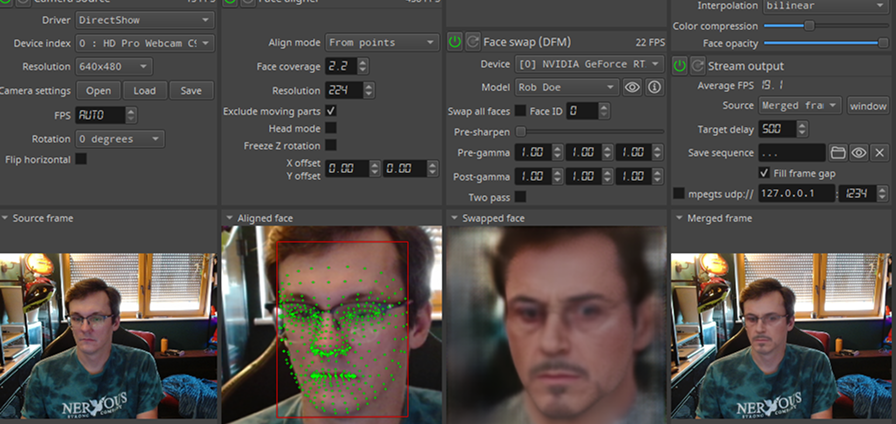 For the digital vector we’ve prepared set of independent models responsible
for face-swapping and used OBS to pipe it through a BlueStack mobile device
simulator.
The digital layer was the more technically obvious path. We set up a pipeline using OBS and BlueStacks to route a manipulated video stream directly into the verification flow — essentially replacing the live webcam feed with processed footage before it ever reached the system. On top of that, we trained deepfake models specifically on the target identity: recording footage from multiple angles under controlled lighting, training a face-swap model over hundreds of thousands of iterations, then running the output through the live pipeline in real time. The model trained on our own RTX 4090 lab setup; for the attack runs we had access to significantly more compute.
What this vector demonstrated is that the boundary between "live camera" and "processed stream" is, for many systems, effectively invisible at the transport layer — particularly if the attacker controls the client device. This is a known class of attack. We documented it, built reproducible setups for it, and it confirmed the expected weaknesses.
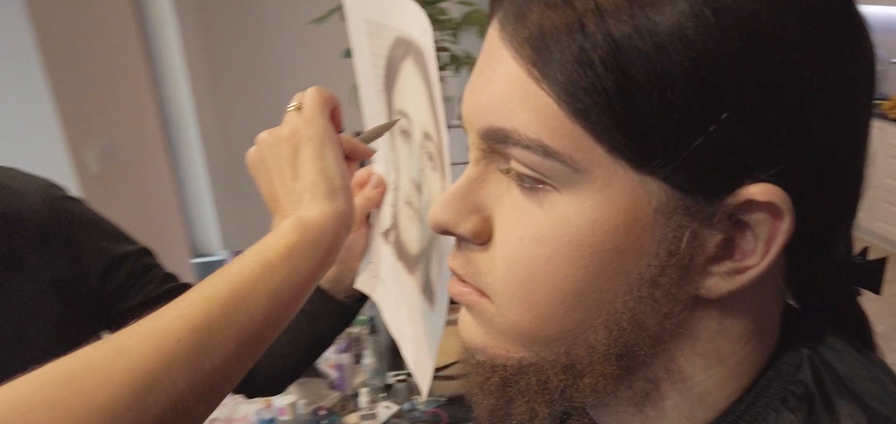
The physical layer was where things got more interesting.
Our hypothesis was that the model's recognition logic was vulnerable to controlled modifications of facial geometry as read from a video stream — that if you understood what features the model was weighting, you could move those features toward a target identity without triggering the liveness rejection that would catch a screen replay or a deepfake artifact.
To test this we brought in professional film makeup artists. The model — the person being made up — was selected deliberately for significant physiological distance from the target identity: different face shape, different skin tone, different bone structure. The goal was to make the gap as hard to close as possible, to avoid a test that only worked because we chose an easy pair.
MAKEUP BRIEF STAGES
THE STEP-BY-STEP PROCESS OF ADVERSARIAL OBFUSCATION
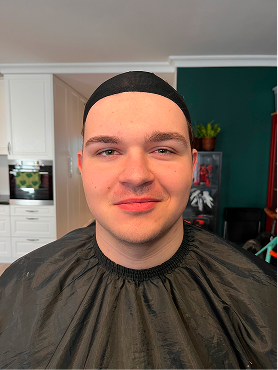
MAKEUP BASE
Initial baseline. Focus on neutralizing natural skin reflectance to confuse infrared sensors.
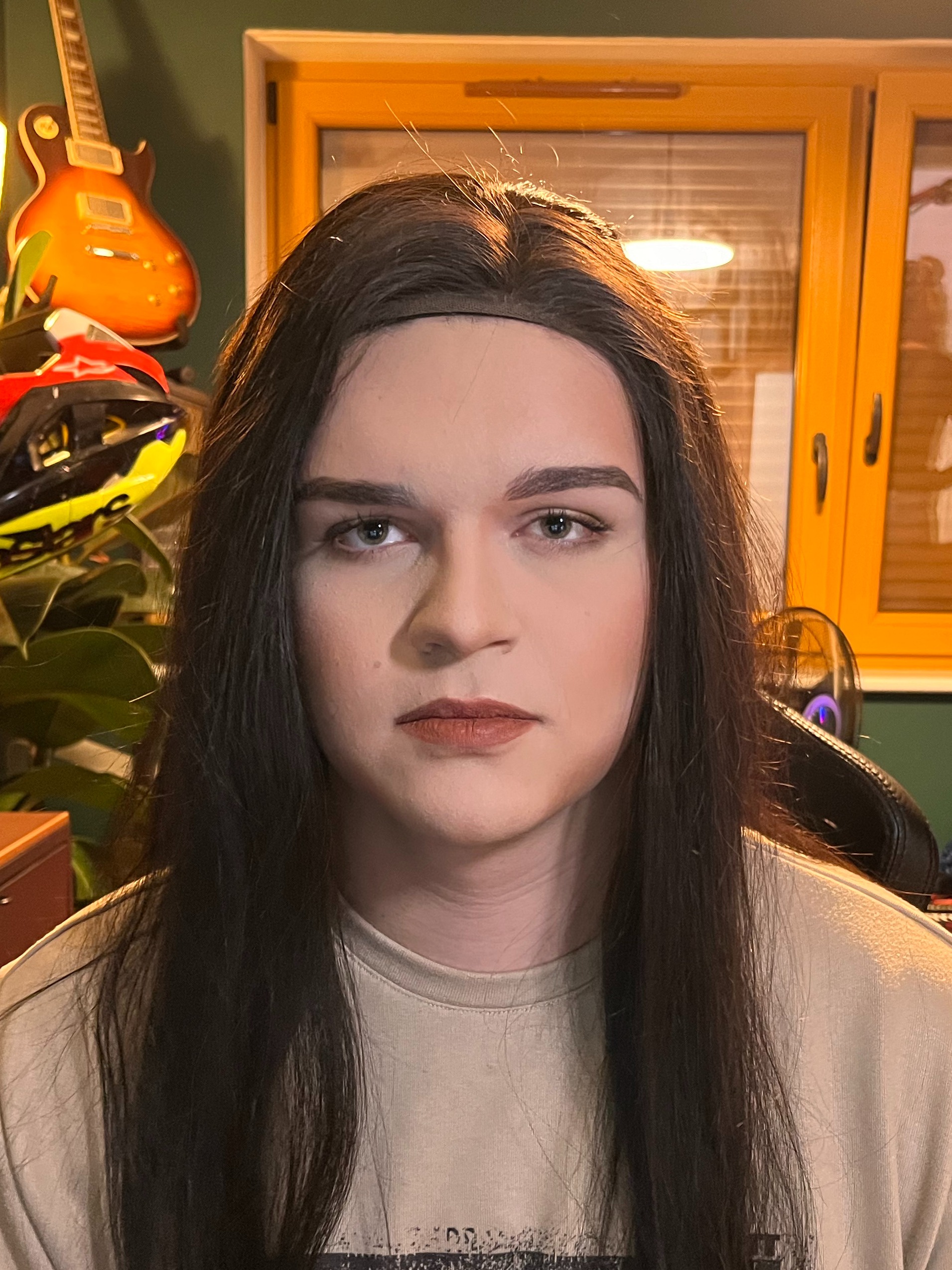
MINIMAL
Active camouflage. Utilizing high- contrast shapes to redefine the mouth and eye perimeters.
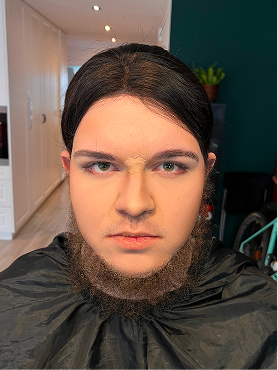
FULL PACKAGE
Full adversarial mask. Total re-sculpting of the face to match a pre-computed target identity.
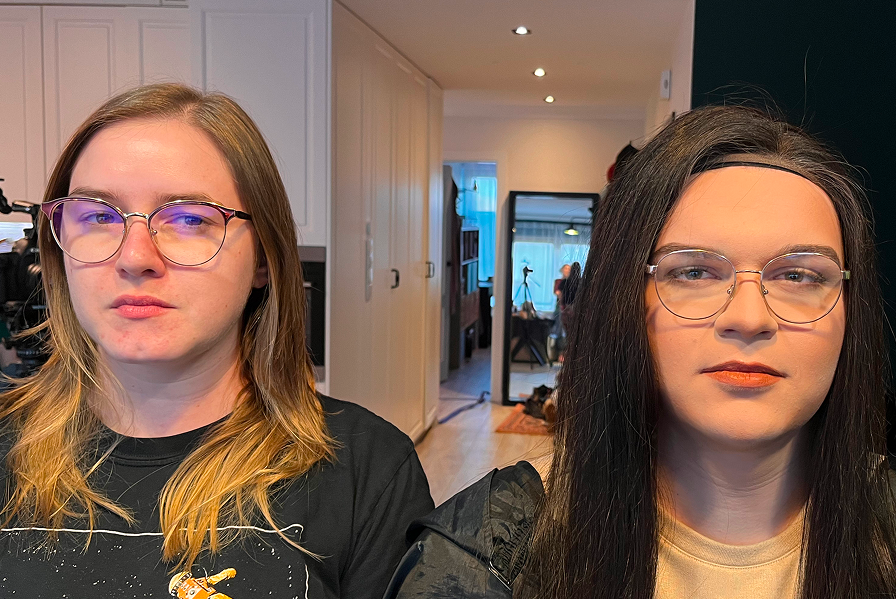 Model in Minimal setup compared to the real base
The makeup brief went in stages. MAKEUP BASE was the baseline — the model without intervention, to establish how the system read them. MINIMAL was an intermediate stage — structural changes only, using contouring and prosthetic techniques to shift the geometry of the face toward the target. FULL PACKAGE was the full characterization: wig, full makeup, controlled lighting setup adjusted to match the conditions under which the reference document photograph was taken, and camera positioning calibrated to the same angle.
Each stage was tested against the system. Each stage's results were logged.
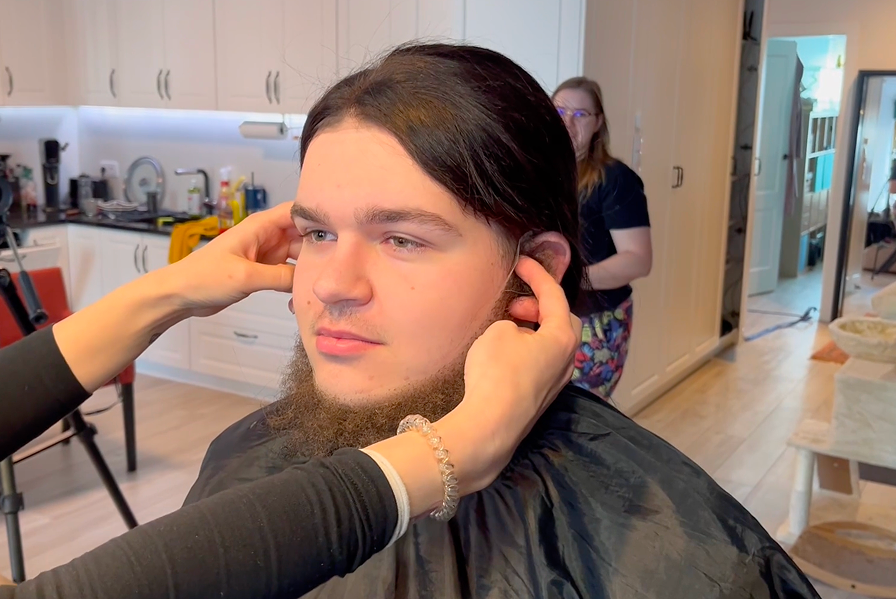 Some shots from the process
Across two independent rounds of testing — our own and the external auditor's — the physical attack succeeded 16 times out of 24 attempts.
The number
The "99.9% accuracy" was a marketing fiction. In our controlled adversarial testing, the reality was starkly different. We didn't just bypass the model; we made it irrelevant.
For context: a system targeting eIDAS LoA High compliance should, under deliberate attack conditions, be failing an attacker far more than it succeeds. The acceptable window is measured in single-digit percentages at most — and for the highest assurance levels, fractions of that.
We won't detail which specific stages of the characterization crossed which thresholds, and we won't name the client or the external auditor. That's not evasion — it's the terms under which this kind of work is done. What we can say is that the results were replicated independently, documented formally, and delivered with a full breakdown of which attack conditions produced which outcomes.
What happened after
The results fed directly into rebuilding the training dataset. The attack scenarios we'd constructed — the lighting conditions, the makeup stages, the deepfake pipeline outputs — became negative examples in the model's updated training data. The adversarial inputs that had worked became the inputs the model learned to reject.
The client went through the certification process. They passed.
The question we'd leave you with
The interesting thing about this kind of work isn't the attack itself. Attacks against biometric systems are documented in academic literature, and the general shape of what we did here isn't surprising to anyone working in this space.
What's less common is a team that understands the system from the inside — that spent two years watching how a model reads a face before spending six months figuring out how to make it read the wrong one. The threat model we built wasn't assembled from papers. It came from proximity.
If you're building something in this space, or you have something built and you're wondering whether it would hold — that proximity is what we offer.